

Authentic Kerala fish curry for a perfect seafood meal.
Kerala fish curry, or “Meen Curry,” is more than a dish. It’s a deep dive into coastal traditions. This curry turns fresh seafood into a vibrant, aromatic feast for your senses.
Exploring Kerala fish curry with coconut milk reveals a seafood masterpiece. It’s a mix of complex spices, tangy notes, and rich coastal tastes. Traditional recipes use whole spices, fresh ginger, garlic, and kodampuli (Malabar tamarind) for a memorable meal.
This curry’s magic is in its flexibility. You can make it with or without coconut milk, tailoring it to your liking. Cooking in coconut oil boosts the authentic taste, taking you on a journey through Kerala’s food scene.
Table of Contents
Key Takeaways
- Authentic Kerala fish curry is more than a meal—it’s a cultural experience
- Kodampuli provides unique tangy flavor to the dish
- Coconut oil is essential for traditional preparation
- The curry can be made with or without coconut milk
- Pairs perfectly with Kerala red rice (matta rice)
Discovering the Rich Flavors of Traditional Kerala Cuisine
Kerala’s coastal areas offer a delicious journey into the heart of south indian seafood culture. The traditional kerala cuisine comes from a place where the Arabian Sea meets lush coconut groves. This creates a culinary paradise that celebrates fresh seafood and vibrant flavors.
The kerala coastal heritage is deep in every coastal fish curry. It tells stories of generations of fishermen and culinary traditions. Families along the Malabar coast have mastered the art of turning the day’s catch into mouth-watering dishes. These dishes reflect the region’s rich maritime history.
The Coastal Culinary Landscape
Kerala’s 580-kilometer coastline is more than just a geographical feature—it’s the heart of the region’s cuisine. Local communities have developed unique cooking techniques. They turn simple ingredients into extraordinary meals:
- Fresh seafood caught daily
- Abundant coconut plantations
- Aromatic spice collections
- Generations of cooking wisdom
What Makes Kerala Fish Curry Extraordinary
Kerala’s coastal fish curry is unique compared to other Indian curries. Its magic lies in its delicate balance of flavors. This balance is a harmonious mix of:
| Ingredient | Flavor Profile |
|---|---|
| Coconut Milk | Creamy base |
| Tamarind | Tangy undertone |
| Curry Leaves | Earthy essence |
| Kashmiri Chili | Subtle heat |
“Every fish curry tells a story of the sea, the land, and the people who connect them.” – Kerala Culinary Tradition
Regional variations add depth to this culinary tradition. From Kottayam’s Meen Vevichathu to Malabar’s signature preparations, each style brings its own unique touch. This makes the beloved coastal fish curry even more special.
Essential Ingredients for Authentic Meen Curry Recipe
To make a real meen curry, you need the right ingredients. These ingredients bring out Kerala’s coastal flavors. The mix of spices and fresh parts turns a simple dish into a work of art.
Start by picking the best fish for your curry. Choose firm white-fleshed fish for the authentic taste.
Key Ingredients for Traditional Kerala Fish Curry
- Fresh Fish: 250-300 grams of firm white fish
- Coconut Oil: 5 tablespoons (crucial for authentic flavor)
- Whole Spices:
- Mustard seeds
- Fenugreek seeds
- Aromatics:
- Fresh ginger
- Garlic
- Onions or shallots
- Curry leaves
The spices make this dish special. Ingredients like Kashmiri chili powder, coriander powder, and turmeric add depth. They make this curry stand out from other Indian seafood dishes.
| Spice Powders | Quantity | Purpose |
|---|---|---|
| Kashmiri Chili Powder | 4 tablespoons | Color and mild heat |
| Coriander Powder | 2 tablespoons | Depth and thickness |
| Turmeric Powder | 1 teaspoon | Color and health benefits |
For a true Kerala fish curry, use fresh spices and quality coconut oil. These ingredients are key to a remarkable meen curry that shows Kerala’s coastal flavors.
Understanding Kodampuli and Tamarind in South Indian Fish Curry
South Indian fish curry is known for its tangy taste, thanks to kodampuli and tamarind. These ingredients turn a simple seafood dish into a special treat. It shows the rich coastal traditions of Kerala.
The world of south indian fish curry wouldn’t be the same without kodampuli, also known as Malabar tamarind or garcinia cambogia. This sun-dried fruit adds a unique flavor. It makes traditional recipes stand out from others.
The Unique Role of Kodampuli in Traditional Recipes
Kodampuli does more than add sourness to fish curry. It brings:
- A smoky, tangy flavor unique to Kerala cuisine
- Natural preservation properties for seafood
- Potential digestive and metabolic health benefits
In Kottayam, Malabar, and Kumarakom, kodampuli is a key ingredient. It’s soaked in warm water before adding to the curry. You can find it in Indian grocery stores or online.
Substituting with Regular Tamarind
If kodampuli is hard to find, regular tamarind is a great substitute. Here’s how to use it:
- Take a lemon-sized tamarind ball (about 50 grams)
- Soak in warm water for 10 minutes
- Squeeze and strain to extract approximately 3 tablespoons of pulp
Regular tamarind adds great sourness but misses kodampuli’s smoky notes. Still, your fish curry will taste amazing.
Kerala Fish Curry with Coconut Milk
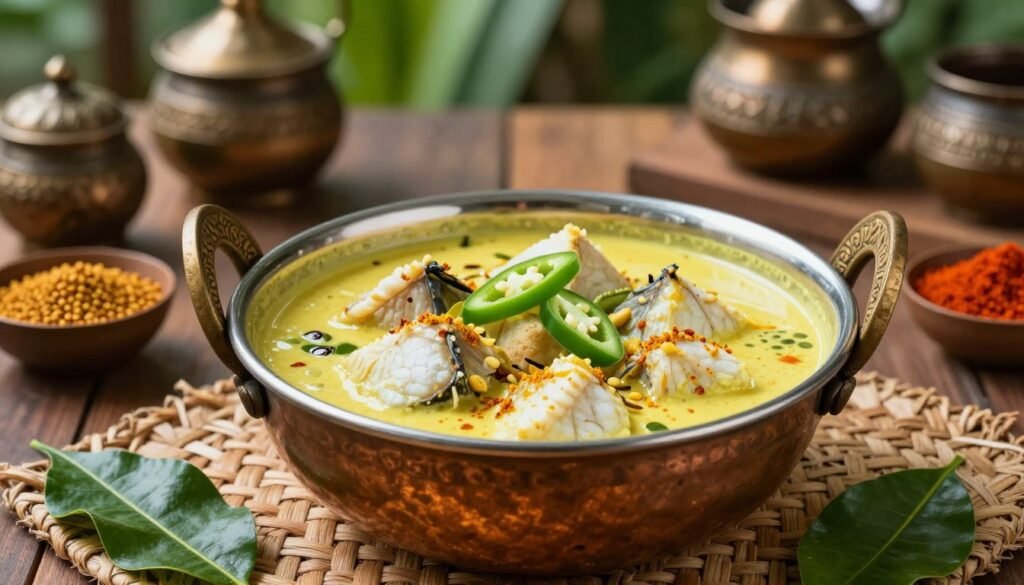
Explore the creamy world of Kerala fish curry. Coconut milk turns a simple seafood dish into a luxurious treat. The Kerala fish molee is a top coastal dish, mixing rich flavors with smooth textures. It shows the true taste of South Indian cuisine.
Two main ways make this coconut milk seafood curry perfect:
- Thick Coconut Milk Method: Add 165ml of thick coconut milk after cooking the fish. Simmer gently for just 2 minutes to avoid curdling.
- Fresh Coconut Method: Grind 1½ cups of freshly grated coconut with turmeric into a smooth paste. This makes an authentic curry base.
For the best fish curry with coconut milk, follow these key techniques. The Malabar region loves this creamy fish curry style. It has a milder and more delicate taste than spicier versions.
“The secret to a perfect Kerala fish curry lies in the careful treatment of coconut milk” – Kerala Culinary Tradition
Professional chefs say to use thick, first-press coconut milk for the best flavor. This method gives a silky sauce that perfectly coats your fish. It makes for a real coastal dining experience.
Choosing the Perfect Fish for Your Spicy Fish Curry Recipe
Choosing the right fish is key to making a great malabar fish curry. The fish you pick can change how your curry tastes and feels. Knowing which fish works best will make your seafood dish unforgettable.
Best Fish Varieties for Authentic Curry
For a true Kerala curry, pick fish that stays firm during cooking. The best fish has white, firm flesh that soaks up spices well.
- Sardines (Malabar Mathi): The most authentic choice for regional flavor
- Seer Fish: Meaty and perfect for robust curry preparations
- King Fish: Excellent for holding shape during cooking
- Alternative Options:
- Salmon
- Tilapia
- Cod
- Haddock
Boneless versus Bone-In Fish Selections
Choosing boneless or bone-in fish affects your curry’s flavor. Bone-in fish adds more gelatin and flavor, making the sauce richer. Traditional Kerala cooks prefer whole fish or bone-in cuts for the best taste.
| Fish Type | Flavor Intensity | Recommended Quantity |
|---|---|---|
| Bone-In Sardines | High | 250-300 grams |
| Boneless Tilapia | Medium | 250-300 grams |
| Salmon | Rich | 250-300 grams |
Pro tip: Marinate your fish with salt, turmeric, and lemon juice before cooking. This removes any fishy smell and helps the fish soak up the curry’s spices.
Step-by-Step Guide to Making Coastal Fish Curry
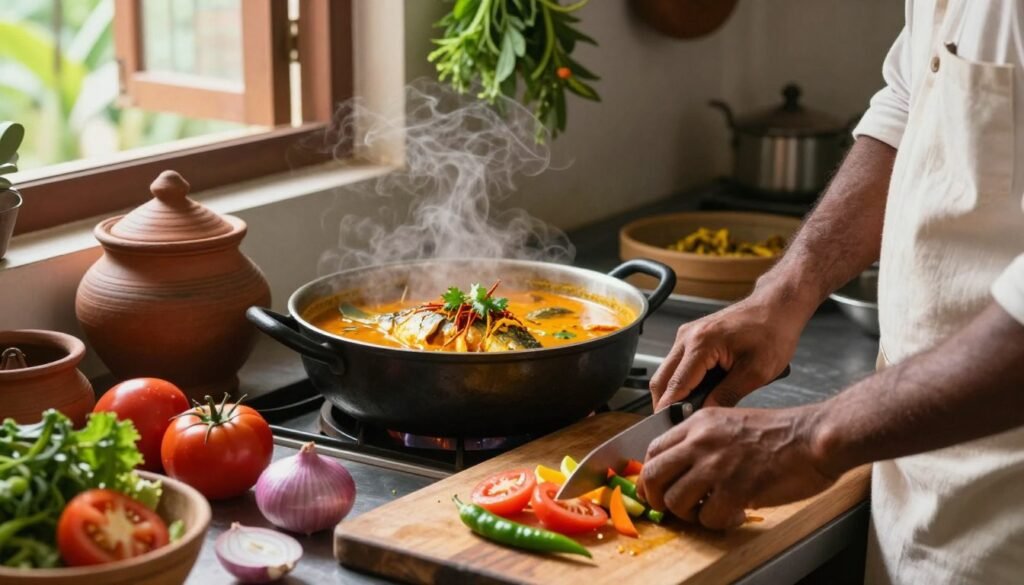
Making coastal fish curry needs patience and focus. This guide will help you make a seafood dish that truly captures Kerala’s flavors.
First, get all your ingredients ready. This step is crucial for a delicious meal that feels like a trip to India’s southern coast.
- Tamarind Preparation: Soak tamarind in warm water for 10 minutes. Carefully get the pulp out, which adds a tangy taste to your curry.
- Oil and Tempering: Heat coconut oil in a clay pot or heavy pan. Add mustard seeds and fenugreek seeds. Wait for them to crackle and release their scent.
- Aromatics: Stir-fry chopped garlic and ginger for two minutes. Add curry leaves and onions or shallots. Cook until they’re golden.
- Spice Blend: Add your spice mix – turmeric, Kashmiri chili powder, and coriander powder. Roast for 5-6 minutes until fragrant.
When cooking, pay close attention. Add tamarind extract and water, then boil. Gently add fish, keeping the heat low to cook evenly.
- Cook fish for 5-8 minutes
- Watch for fish to turn opaque
- Look for oil separation as a sign of perfect cooking
Pro tip for authentic flavor: Let your fish curry rest for 2-4 hours before serving. This lets the spices blend, making a memorable dish that will wow food lovers.
The Importance of Coconut Oil in Kerala Fish Molee
Coconut oil is key in Kerala cooking, making fish curry special. The right oil can change a dish’s taste completely.
Choosing the right oil is more than just a choice. It’s a tradition that adds depth to every dish. Coconut oil gives a unique flavor that other oils can’t match.
Authentic Flavor Profile with Coconut Oil
In Kerala, coconut oil is more than just a cooking tool. It offers a rich experience with:
- Nutty, rich aroma
- Subtle sweetness
- Ability to enhance spice absorption
- Authentic Kerala cooking signature
Why Other Oils Fall Short
Vegetable or neutral oils can’t compare to coconut oil. Coconut oil’s unique fatty acids carry flavors in a way others can’t.
“Coconut oil is not just an ingredient, it’s the soul of Kerala cuisine.”
For your fish molee, use 2-5 tablespoons of high-quality coconut oil. Your taste buds will appreciate this essential Kerala culinary tradition.
Tempering and Spice Techniques for Coconut Seafood Stew
Learning to temper is key for a real coconut seafood stew. It turns simple dishes into amazing ones by unlocking deep flavors. This is done with heat and spices.
Tempering in Kerala cooking has two main parts. They make your coconut seafood stew stand out:
- First, temper with mustard and fenugreek seeds
- Then, add aromatic ingredients for the final touch
Spice roasting needs patience and care. Here’s how to temper curry leaves perfectly for your stew:
- Heat coconut oil until it starts to shimmer
- Add mustard seeds and wait for them to pop (5-10 seconds)
- Put in thinly sliced shallots and fresh curry leaves
- Fry until shallots are golden and crispy
The trick to great spice roasting is cooking at low heat. Turn down the flame and toast spices for 5-6 minutes. They’re ready when they smell nutty and lose their harshness.
You can add things like julienned ginger or extra green chilies for more flavor. Pour the tempered oil over your curry just before serving. This makes your dish look and smell amazing, just like Kerala’s coastal food.
Serving Suggestions and Perfect Pairings with Kerala Matta Rice
Your Kerala fish curry needs the right sides to make it special. The right choices can turn a simple meal into a memorable experience. It’s all about celebrating the rich tastes of South Indian food.
Kerala matta rice is the best match for your spicy fish curry. It has a unique nutty taste and a sturdy texture. These qualities make it perfect for balancing the curry’s strong spices.
When planning your meal, think about these traditional sides:
- Kerala matta rice (the top choice)
- Kappa (boiled tapioca)
- Chapati or naan bread
- Steamed white rice
Traditional Fish Curry Accompaniments
Knowing the classic pairings makes meal planning easier. Kappa puzhukku, a spiced tapioca mash, is a great contrast to the curry’s bold taste. It’s starchy and adds nutrition to your meal.
Enhancing Flavors through Advanced Preparation
Tip for fish curry lovers: your dish gets better with time. Let it rest for 2-4 hours before serving, or make it a day ahead. This lets the spices blend, making the flavors richer and more complex.
To store your curry, cool it down and put it in the fridge in a sealed container. Reheat it slowly, adding a bit of water if it gets too thick.
Conclusion
Learning to make authentic Kerala fish curry is more than just a recipe. It’s about connecting with a deep culinary tradition. You’ve seen how simple ingredients can make amazing flavors. Making fish curry at home is an art that mixes technique, spices, and passion.
This Kerala seafood dish is very flexible. You can try different fish, change spice levels, and still keep the recipe’s heart. Whether you use fresh local fish or adjust ingredients, your curry will take you to South India’s coast.
Great cooking needs patience and love. The slow roasting of spices, choosing the right ingredients, and letting the curry rest are key. Your Kerala fish curry is more than food—it’s a journey to connect with culinary traditions.
As you keep learning and improving, this recipe will become more than a meal. It’s a way to dive into Kerala’s food culture, bring family together, and have a tasty adventure in your kitchen. Trust your instincts and enjoy every aromatic bite of your homemade Kerala fish curry.