
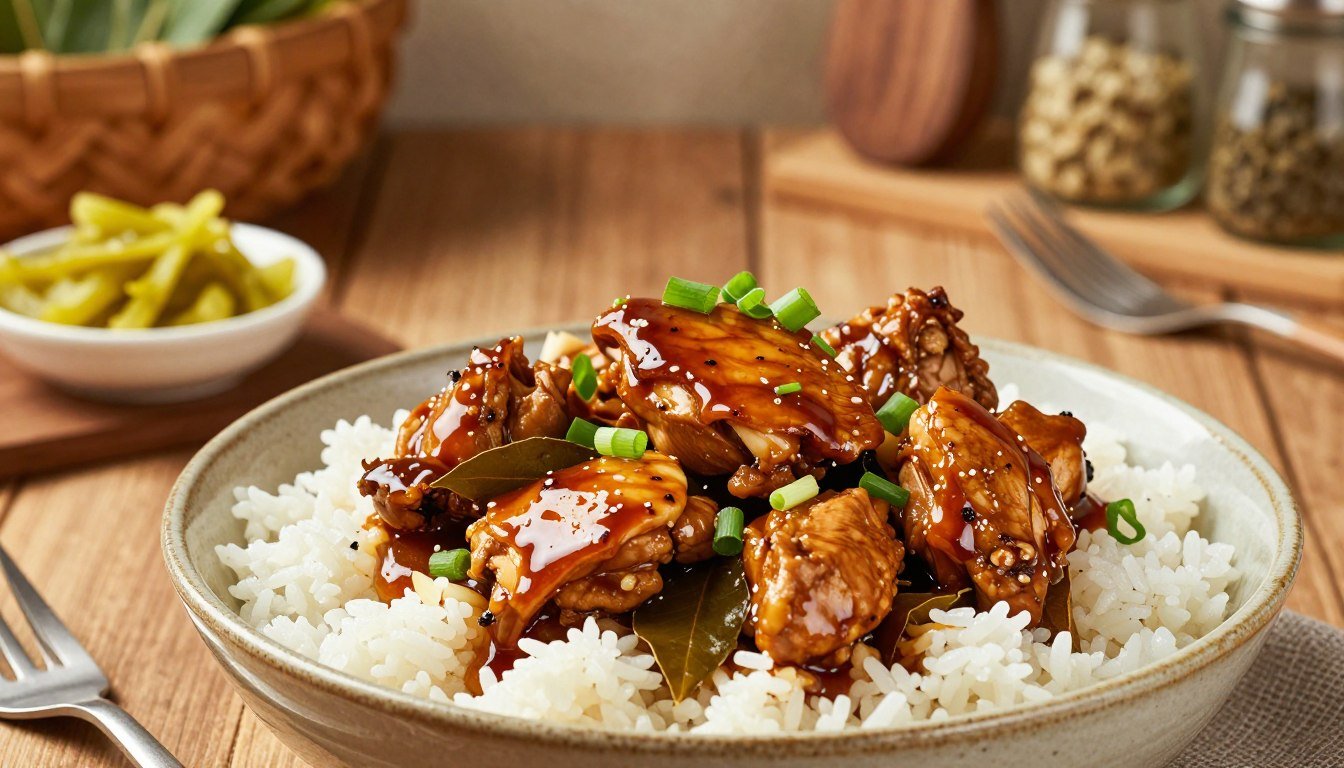
Adobo Chicken: Traditional Filipino Cooking Method
The first time I tasted authentic Filipino adobo chicken, it was like discovering a culinary secret. The rich, tangy flavors danced across my palate. They told a story of tradition, family, and generations of cooking wisdom passed down through time.
This traditional chicken adobo is more than just a meal. It’s a cultural journey through the Philippines’ vibrant culinary landscape. The filipino adobo recipe transforms simple ingredients into a symphony of flavors. It captures the heart of Filipino home cooking.
What makes adobo chicken special is its incredible simplicity. Using just a handful of pantry staples like vinegar, soy sauce, and garlic, home cooks can create a dish. It’s both deeply comforting and incredibly delicious. It shows the magic that happens when basic ingredients are treated with respect and understanding.
Table of Contents
Key Takeaways
- Adobo chicken is the national dish of the Philippines
- Uses simple, everyday ingredients
- Creates a unique balance of tangy and savory flavors
- Represents centuries of Filipino culinary tradition
- Can be prepared easily in home kitchens
What Makes Filipino Adobo Chicken a National Treasure
Filipino cuisine is a vibrant mix of flavors that tell the nation’s story. At its heart is traditional chicken adobo, a symbol of the Philippines’ rich culture.
Adobo chicken is seen as the unofficial national dish. It’s a blend of history and cooking techniques. This unique mix shows how different cultures have shaped Filipino food over time.
The Cultural Significance of Adobo in Filipino Cuisine
Adobo chicken is more than just a meal. It’s a tradition that shows the true spirit of Filipino cooking:
- It combines indigenous methods with Spanish and Chinese styles.
- It shows how to preserve meat with vinegar and soy sauce.
- It stands for resilience and creativity in food culture.
Why Chicken Adobo Has Become a Comfort Food Staple
Chicken adobo is a deeply emotional culinary experience. Its flavors evoke feelings of home, family, and tradition for Filipinos everywhere.
A single bite of traditional chicken adobo can transport you across thousands of miles, bringing memories of family gatherings and shared meals.
The dish’s fame comes from its simple yet rich flavors. It turns basic ingredients into a memorable meal. This makes adobo chicken a true showcase of Filipino culinary genius.
Understanding the Essential Ingredients in Chicken Adobo
To make a real adobo chicken recipe, you need the right ingredients. The secret to Filipino adobo is its mix of flavors. It turns simple chicken into a dish to remember.
Your authentic adobo seasoning includes a few key parts. These parts make the traditional dish come alive:
- Soy Sauce: The main seasoning that adds depth and saltiness
- Vinegar: Brings a tangy brightness to the dish
- Garlic: Essential for the flavor of adobo chicken
- Black Peppercorns: Adds a subtle heat and complexity
- Bay Leaves: Adds an herbal undertone
When making your Filipino adobo recipe, think about these flexible ingredients:
| Ingredient | Standard Option | Alternative Options |
|---|---|---|
| Soy Sauce | Regular | Low-sodium, Tamari, Coconut Aminos |
| Vinegar | White Vinegar | Apple Cider, Rice Vinegar |
| Optional Additions | None | Jalapeño, Ginger, Brown Sugar |
Pro tip for your adobo chicken: Feel free to try different ingredients. Each change can give a new twist to this classic Filipino dish. It lets you make it your own while honoring its rich tradition.
The Role of Vinegar and Soy Sauce in Traditional Adobo
The heart of any authentic Filipino adobo recipe is its mix of vinegar and soy sauce. These ingredients turn simple soy sauce vinegar chicken into a masterpiece. The mix of tangy and savory flavors makes adobo chicken unforgettable.
It’s key to understand how vinegar and soy sauce work together in adobo chicken. They create complex flavors that make this dish a favorite in Filipino kitchens.
Choosing the Right Vinegar for Your Adobo Chicken
Choosing the right vinegar is crucial for your Filipino adobo recipe. The most popular options are:
- Apple Cider Vinegar: The most common choice, offering a fruity and mild acidity
- White Vinegar: Provides a sharper, more intense tang
- Rice Vinegar: Delivers a subtle, slightly sweet undertone
Balancing Soy Sauce for Perfect Saltiness
The right soy sauce adds depth and umami to your adobo chicken. Consider these options:
| Soy Sauce Type | Flavor Profile | Best Used For |
|---|---|---|
| Low-Sodium Soy Sauce | Milder saltiness | Controlled seasoning |
| Regular Soy Sauce | Traditional intense flavor | Classic adobo chicken |
| Dark Soy Sauce | Rich color and depth | Added complexity |
Pro tip: If your sauce is too sour, add a tablespoon of brown sugar or honey. This balances the flavors. The goal is to create a harmonious blend that complements the chicken and rice perfectly.
How to Prepare Authentic Filipino Adobo Chicken
Making easy adobo chicken is all about the traditional cooking method. This method makes the Filipino classic so loved. It might seem hard, but with the right steps, you’ll get it down in no time.
To begin your traditional chicken adobo, you’ll need these key ingredients:
- Chicken pieces
- White vinegar
- Soy sauce
- Garlic cloves
- Black peppercorns
- Bay leaves
The key to authentic adobo chicken is marinating. Marinate your chicken for at least 30 minutes, though overnight marination will deliver the most intense flavors. This step lets the meat soak up the vinegar and soy sauce mix.
“Adobo is not just a recipe, it’s a cooking technique that defines Filipino cuisine.” – Filipino Culinary Experts
Here’s how to cook your adobo chicken:
- Brown chicken pieces in a hot pan (3 minutes per side)
- Add marinade and water to the skillet
- Bring mixture to a boil
- Reduce heat and simmer covered for 45 minutes
- Uncover and cook an additional 15 minutes to reduce sauce
- Remove bay leaves before serving
Pro tip: Some people add potatoes or carrots during simmering. This lets you make your easy adobo chicken your own way.
Marinating Your Chicken for Maximum Flavor
Creating the perfect chicken adobo marinade is an art. It turns simple ingredients into a culinary masterpiece. Your filipino adobo recipe starts with infusing maximum flavor into every bite of chicken adobo.
The secret to authentic adobo chicken is in the marinade. A good marinade seasons, tenderizes, and deeply penetrates the meat.
The Importance of Garlic and Black Pepper
Garlic is key in any traditional filipino adobo recipe. You’ll need:
- 5-8 fresh garlic cloves
- Crushed or finely minced
- Releases intense aromatic oils
Black pepper adds depth. Freshly ground peppercorns bring a subtle heat that complements the marinade’s tangy profile.
Overnight Marination Versus Quick Preparation
Time is crucial when preparing your chicken adobo marinade. Here’s a look at marination strategies:
| Marination Time | Flavor Intensity | Recommended Usage |
|---|---|---|
| 30 minutes | Basic flavor | Quick weeknight meals |
| 4 hours | Good flavor development | Planned dinner |
| Overnight (8-12 hours) | Maximum flavor penetration | Best results |
Pro tip: Never throw away your marinade. It becomes the base of your cooking liquid, ensuring every drop of flavor is in your dish.
Simmering and Braising Techniques for Tender Adobo Chicken
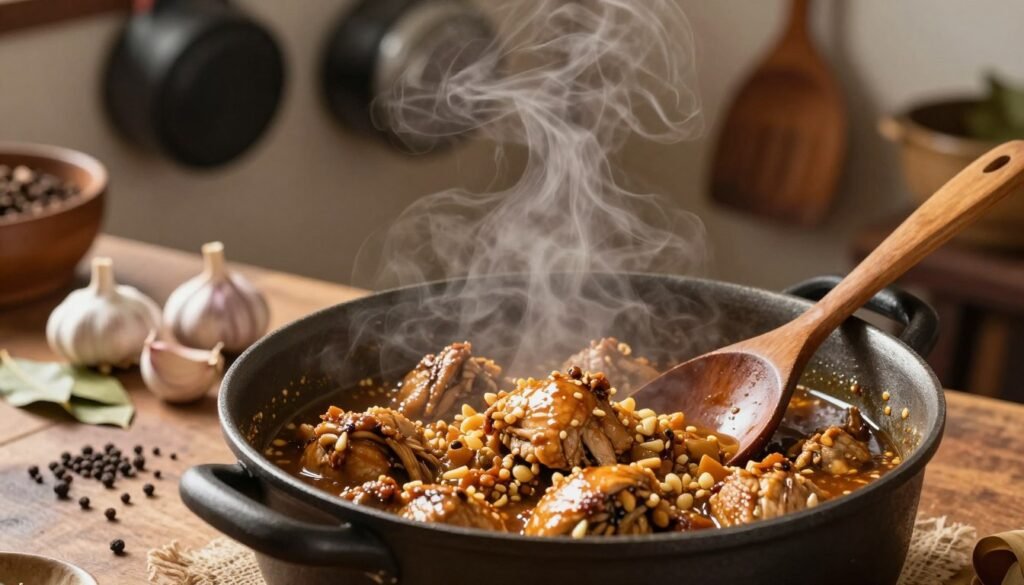
Learning to make one-pot adobo chicken is all about simmering and braising. It’s a cooking method that turns simple ingredients into a delicious dish. This process is key to making your traditional chicken adobo.
To make perfect adobo chicken, start by putting your marinated chicken, marinade, water, and bay leaves in a deep skillet or Dutch oven. Heat it up until it boils, then lower the heat to a gentle simmer.
- Cover the pot to create a braising environment
- Simmer for approximately 45 minutes
- Stir occasionally to prevent sticking
- Check for tenderness of meat and any added vegetables
Here’s a tip for your one-pot adobo chicken: Let the pan cool a bit before adding sauce. This helps prevent the soy sauce from burning and keeps the flavor balanced.
| Cooking Stage | Temperature | Duration |
|---|---|---|
| Initial Boiling | Medium-High | 5 minutes |
| Simmering | Medium-Low | 45 minutes |
Don’t worry if the sauce doesn’t completely cover the chicken – it’s normal in traditional chicken adobo. The braising method makes the meat tender and full of flavor.
The secret to tender adobo chicken is patience and low, slow cooking.
Creating the Perfect Adobo Sauce Consistency
Getting the sauce right is key for authentic adobo chicken. The right thickness makes your dish go from good to great. It ensures every bite is full of rich flavor.
The sauce reduction is an art that needs focus. After simmering for 45 minutes with the lid on, remove it. Then, cook for another 15 minutes. This step helps the flavors deepen by evaporating excess liquid.
Understanding Sauce Reduction Techniques
Your aim is a sauce that coats the chicken well but isn’t too thick or dry. Here are some tips:
- Look for visual signs of the right reduction
- Strive for a sauce that sticks to the chicken
- Don’t let the sauce get too thick
Professional chefs use two main ways to get the sauce just right:
- Natural Reduction: Simmer with the lid off
- Cornstarch Slurry Method: Mix 1 tablespoon of cornstarch with 1 tablespoon of water
“The perfect adobo sauce should be thick enough to dance on your rice, but not so heavy that it drowns the dish.” – Filipino Culinary Tradition
For the cornstarch method, simmer for two more minutes after adding the slurry. This step removes any raw starch taste and gets your sauce to the perfect thickness.
Regional Variations and Modern Twists on Traditional Chicken Adobo
Filipino adobo chicken is more than one recipe. It’s a canvas that shows the rich tastes of the Philippines. Each area adds its own special touch to this beloved dish. This makes the traditional recipe come alive with local flavors and cooking ways.
- Protein Options:
- Pork belly and shoulder
- Beef cuts
- Seafood selections
- Vegetable-based adaptations
Chicken lovers can try various cuts for their adobo. Each cut has its own taste and texture:
- Chicken Cut Varieties:
- Drumsticks
- Thighs
- Wings
- Bone-in breasts
Today’s cooks use new ways to make filipino adobo recipe easier:
| Cooking Method | Time | Benefits |
|---|---|---|
| Slow Cooker | 8 hours (low) | Hands-off, tender meat |
| Instant Pot | 10-25 minutes | Quick preparation, consistent results |
Adobo chicken has become more flexible for different diets. Coconut aminos are great for paleo diets, and tamari is a gluten-free choice. You can also add brown sugar or honey to make it sweeter.
Best Side Dishes to Serve with Your Adobo Chicken
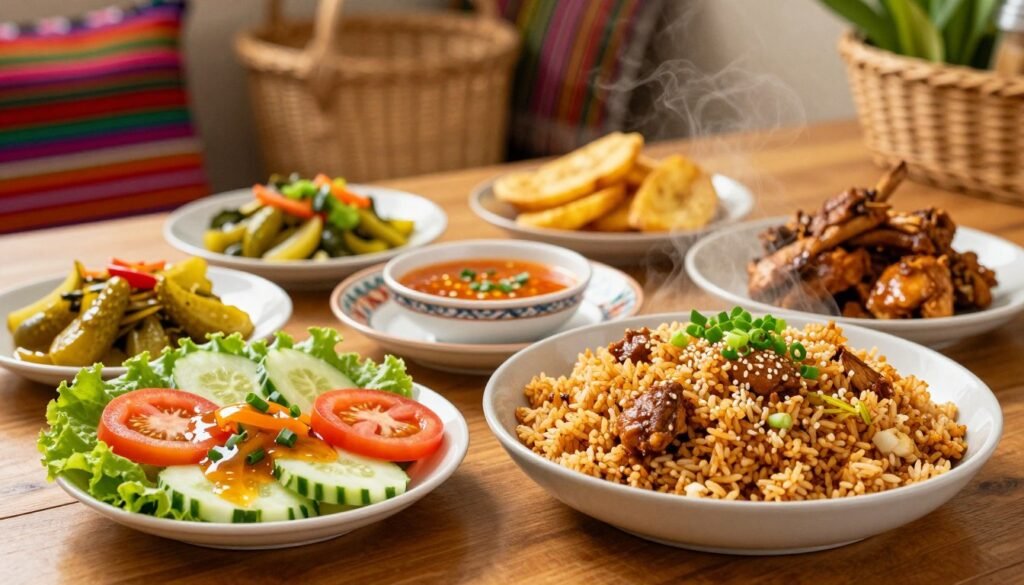
Choosing the right side dishes for adobo chicken is key. It makes your meal unforgettable. The perfect sides balance out the flavors, making your dining experience better.
Traditional Filipino dishes offer great side options for adobo chicken. These dishes enhance the dish’s bold flavors:
- Plain white rice (most authentic choice)
- Brown rice for added nutrition
- Quinoa as a protein-rich alternative
- Creamy mashed potatoes
White Rice: The Classic Companion
White rice is the top choice for adobo chicken. It’s not just for eating. Its neutral taste lets the adobo sauce shine.
Try pouring the sauce over the rice. It makes each grain taste amazing. For extra flavor, add:
- Sliced spring onions
- Fresh lime wedges
- A small side of cucumber salad
Exploring Flavor Combinations
While white rice is traditional, try new things. A green salad or cucumber salad can be a nice change. The goal is to find sides that enhance the chicken’s taste without taking over.
Pro tip: Add a squeeze of fresh lime juice. It brightens the dish and adds a zesty touch.
Storing and Reheating Your Filipino Chicken Adobo
After making your tasty adobo chicken, it’s important to know how to store and reheat it. This way, you can enjoy its rich flavors for days. Keeping it stored properly helps keep the dish’s amazing taste and texture.
Here are the key steps for storing your adobo chicken:
- Cool the dish to room temperature before storing
- Use an airtight container for refrigeration
- Refrigerate within 2 hours of cooking
Pro tip: Adobo chicken gets even better with time. The vinegar softens, making the flavors blend together perfectly.
Refrigerator Storage
Your filipino adobo recipe will keep well in the fridge for 3-4 days. Keep it in a sealed container to keep moisture in and the texture juicy.
Freezer Storage
Freeze your adobo chicken for up to 3 months for long-term storage. Thaw it in the fridge overnight before reheating for the best taste.
Reheating Methods
You have two main ways to reheat your adobo chicken:
- Microwave: Fast and easy for single servings
- Stovetop: Best for keeping the texture right
- Use medium-low heat
- Add a splash of water if sauce has thickened
- Cover to prevent chicken from drying out
“The magic of adobo chicken is that it often tastes even better the next day!” – Filipino Cooking Experts
By using these storage and reheating tips, your adobo chicken will stay as tasty as when you first made it.
Common Mistakes to Avoid When Making Adobo Chicken
Getting your adobo chicken recipe right means avoiding common mistakes. Even a simple adobo chicken dish can fail if you’re not careful. Paying attention to detail is key.
Mastering adobo chicken involves overcoming several cooking challenges. Learning how to adjust flavors and avoid mistakes can make your dish outstanding.
Balancing Flavors Like a Pro
Getting the taste just right in your adobo chicken is all about seasoning. Here are some tips:
- If the sauce is too sour, add 1 tablespoon of brown sugar
- Adjust saltiness with more soy sauce
- Boost tanginess with a bit of vinegar
- Check and adjust flavors just before serving
Preventing Soy Sauce Burning
Burnt soy sauce can spoil your adobo chicken. Here’s how to avoid it:
- Let the pan cool for 1-2 minutes after searing chicken
- Add sauce to a slightly cooler pan
- Don’t overcrowd the chicken when searing
- Work in batches for even browning
Traditional adobo chicken sauce doesn’t fully cover the meat. This is part of the authentic way to make it. By mastering these techniques, you’ll create a delicious dish that respects Filipino cooking traditions.
Conclusion
Your journey into traditional chicken adobo is more than just a recipe. It’s a dive into Filipino culture. It connects you to generations of cooks who have made this dish special.
Adobo chicken is very flexible. You can use dark meat chicken thighs or lean drumsticks. The secret is in mixing vinegar, soy sauce, and garlic. This mix creates a flavor that’s truly amazing.
Now, you can make authentic adobo chicken at home. Feel free to try different versions and add your own twist. Serve it over white rice to feel like you’re in the Philippines.
This dish shows how simple ingredients can become something amazing. Your journey with adobo chicken is just starting. You can explore and create in the kitchen without limits.