
Fish Batter, Oil, and Cooking Tips
Growing up in a coastal Southern family, fried fish was more than a meal. It was a tradition passed down through generations. My grandmother’s kitchen always smelled of sizzling golden fried fillets, crispy and perfectly seasoned. Those memories sparked my passion for creating the most delectable fried fish recipes.
Mastering the art of crispy fish recipes isn’t as complicated as you might think. This guide will walk you through everything you need to know. From selecting the right fish to achieving that perfect golden-brown crust, you’ll discover the secrets to creating mouthwatering fried fish.
Preparing fried fish is more than just a cooking technique. It’s about creating memorable meals that bring people together. With the right approach, you can turn a simple piece of fish into a culinary masterpiece that captures the essence of home-style cooking.
Table of Contents
Key Takeaways
- Learn professional techniques for creating perfectly crispy fish
- Understand the importance of oil temperature and batter consistency
- Discover how to select the best fish for frying
- Master coating techniques for golden fried fillets
- Explore traditional and innovative fried fish recipes
Why Fried Fish Is a Beloved American Classic
Fried fish is a big part of American food traditions. It brings together cultural ties and tasty memories. It’s more than just a meal; it’s a way to connect with others.
The tradition of fish and chips is more than food. It ties families and communities together through shared moments and cooking methods.
The Friday Night Fish Fry Tradition
Friday night fish fry events are a big deal in America, especially in the Midwest. They’re especially important during Lent:
- Families come together for seafood dinners
- Church basements host weekly fish fry events
- Local restaurants offer special Friday night menus
“A good fish fry isn’t just about the food—it’s about bringing people together.” – Local Midwestern Chef
From Southern Catfish to British Fish and Chips
There are many ways to enjoy fried fish, each with its own flavor. Southern fried catfish is different from British fish and chips. Yet, both are loved for their crispy, golden seafood.
- Southern style: Catfish with hushpuppies and coleslaw
- British style: Beer-battered cod with malt vinegar
- Regional ingredients create unique flavors
Whether you’re at a small town diner or a coastal restaurant, fried fish brings people together. It’s a dish that connects food lovers across generations.
Choosing the Best Fish for Frying
When you’re making pan fried tilapia or beer battered cod, picking the right fish is key. Not all fish are good for frying. You need ones that can handle high heat but stay soft inside.
The best fish for frying should have certain traits:
- Tender to medium-firm white fish
- Ability to hold together during cooking
- Mild flavor profile
- Flaky texture
Here are some top picks for frying:
| Fish Type | Flavor Profile | Best Cooking Method |
|---|---|---|
| Cod | Mild, classic | Beer battered cod |
| Tilapia | Subtle, versatile | Pan fried tilapia |
| Halibut | Rich, meaty | Deep frying |
| Flounder | Delicate | Light batter frying |
Pro tip: Pat the fish dry before you coat it for a crispy outside. Skinless fillets are great for beginners because they’re easier to coat.
“The key to perfect fried fish is selecting the right type of fish and preparing it correctly.” – Seafood Cooking Expert
Your choice of fish can greatly affect your frying success. Try different types to find your favorite. Remember, tender white fish usually tastes the best.
Essential Ingredients for Perfect Fish Fry Batter
Creating a delicious fish fry starts with the right ingredients. These ingredients turn ordinary fish into a crispy, golden masterpiece. Your fish fry seasoning is key to a memorable meal.
A great fish batter needs a mix of ingredients for a crispy, flavorful coating. Let’s look at the essential parts that will make your fish fry stand out.
Flour, Beer, and Seasonings for Crispy Coating
Your fish fry seasoning blend is the secret to great flavor. A typical mix includes:
- All-purpose flour as the base
- Light beer for carbonation and flavor
- Garlic powder for depth
- Paprika for color and sweetness
- Sea salt and black pepper
| Ingredient | Purpose | Quantity |
|---|---|---|
| All-purpose flour | Provides structure and crispiness | 1½ cups |
| Light beer | Creates air pockets, adds flavor | 12 ounces |
| Fish fry seasoning | Enhances flavor profile | 2-3 tablespoons |
The Role of Eggs in Fish Batter
Eggs are vital in your fish fry batter. They help the seasoned flour stick to the fish. They also add richness and promote browning. Pro tip: Use a lightly beaten egg mixed directly into the batter for best results.
Try adding unique touches to your fish fry seasoning. Cayenne pepper for heat or dried herbs for extra flavor. Homemade batter is incredibly flexible!
Mastering the Beer Battered Fish Recipe
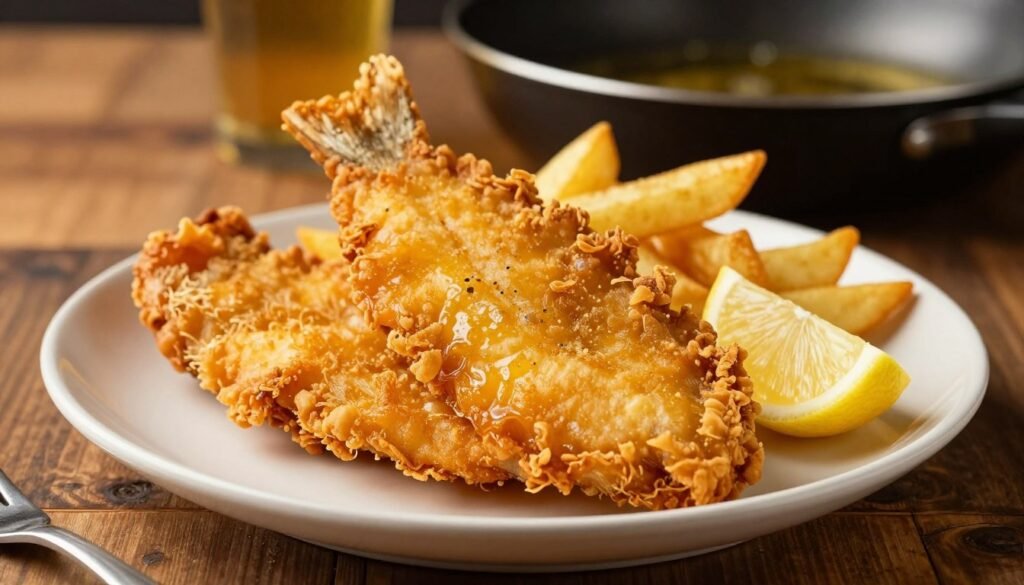
Making the perfect beer battered fish needs precision and a few key techniques. Your crispy coating starts with the right ingredients and knowing the magic of a great fish fry. The secret is mixing flour, seasonings, and beer for a light, airy batter. This turns ordinary fish into a golden delicacy.
To start your beer battered fish journey, get these essential ingredients:
- 1 cup all-purpose flour
- 1 egg
- 12 ounces light beer
- Seasonings (salt, pepper, garlic powder, paprika)
- Firm white fish fillets
A two-step coating process is key for a crispy coating. First, dust your fish with plain flour. This makes the beer batter stick well, leading to a crispy fry.
Beer Batter Preparation Technique
Mix your dry ingredients in a large bowl. Gradually add the beer, whisking until smooth and thin. The beer adds flavor and creates light, crispy bubbles in your coating.
| Ingredient | Quantity | Purpose |
|---|---|---|
| Flour | 1½ cups | Base for crispy coating |
| Light Beer | 12 oz | Creates light texture |
| Egg | 1 whole | Binds batter |
Fry your beer battered fish at 350°F oil temperature. Dip each floured fish piece into the batter, then fry it. Cook for 3-4 minutes, turning once for even crispiness.
“The secret to perfect beer battered fish is in the batter’s consistency and the oil’s temperature.” – Seafood Cooking Experts
Pro tip: Always let excess batter drip off before frying. Drain finished fish on a wire rack to keep that crispy texture.
Creating Cornmeal Crusted Fish and Southern Fried Catfish
Southern cuisine adds a special touch to seafood, especially with southern fried catfish. The secret is the crispy, golden coating that turns simple fish into a masterpiece. Cornmeal crusted fish is a key Southern cooking method that makes home-cooked meals taste like they’re from a restaurant.
When making southern fried catfish, the coating is key. You need to mix ingredients for maximum crunch and flavor.
Using Cornmeal for Extra Crunch
To make the perfect cornmeal coating, choose your ingredients wisely. You’ll need:
- Fine cornmeal
- Self-rising cornmeal
- Seasonings for extra flavor
The best cornmeal crusted fish coating has both texture and taste. A mix of 50% cornmeal and 50% flour is ideal. It gives you crispiness and smoothness.
Fish Fry Seasoning Combinations
| Seasoning | Flavor Profile | Recommended Fish |
|---|---|---|
| Salt & Black Pepper | Classic, Simple | Catfish, Tilapia |
| Cayenne & Garlic Powder | Spicy, Bold | Catfish, Trout |
| Paprika & Herbs | Smoky, Aromatic | Whitefish, Cod |
Pro tip for southern fried catfish: First, dredge your fish in seasoned flour. Then, dip it in egg or buttermilk. Finally, coat it with your cornmeal mix. This method ensures a crispy, well-stuck crust that will make your dish unforgettable.
The secret to perfect cornmeal crusted fish is in the seasoning and the technique!
Selecting the Right Oil for Frying Fish
Choosing the perfect frying oil is crucial for your fish recipe. The right vegetable oil makes the fillets crispy and golden without overpowering the fish’s flavor. Not all oils are good for deep frying.
When picking a neutral oil for frying fish, consider these key factors:
- High smoke point (400-450°F)
- Mild, neutral flavor
- Affordable pricing
- Wide availability
Your best options for frying oil include:
| Oil Type | Smoke Point | Flavor Profile | Cost |
|---|---|---|---|
| Vegetable Oil | 450°F | Completely Neutral | Low |
| Canola Oil | 400°F | Very Mild | Medium |
| Grapeseed Oil | 420°F | Light | High |
Avoid oils with low smoke points like olive oil or butter. They burn quickly and taste bitter before reaching the ideal frying temperature. Stick to vegetable oil or other recommended neutral oils for the best results.
Pro tip: You’ll need about 2 quarts of oil in a deep fryer or large Dutch oven. Make sure the oil is at least 3 inches deep. This helps keep the temperature even and allows the fish to fry properly.
Temperature Control and Cooking Techniques for Golden Fried Fillets
To get perfectly crispy fried fish, you need to master a few key techniques. The secret to golden, mouth-watering results is understanding oil temperature and precise cooking methods.
Successful fish frying depends on keeping the right oil temperature. Your goal is to create crispy results that are evenly cooked and deliciously golden brown. Here are essential tips to elevate your cooking technique:
Mastering the Perfect Frying Temperature
- Use a deep-fry thermometer to monitor oil temperature
- Keep oil consistently at 350°F for optimal frying
- Watch for oil to shimmer before adding fish
If oil temperature drops below 325°F, fish becomes greasy. If it exceeds 375°F, the exterior burns before the interior cooks properly. Precision is key to achieving that perfect crispy coating.
Preventing Soggy Coating
- Use a 12-inch skillet for proper spacing
- Cook fish in small batches
- Allow space between pieces for even cooking
Overcrowding the pan destroys your crispy results. Cook 2-4 pieces at a time, ensuring each piece has room for hot oil to circulate. Cook fish undisturbed for 2-3 minutes per side, flipping only once to maintain the crisp coating.
Check doneness by verifying the internal temperature reaches 145°F. The fish should appear opaque and flake easily with a fork. With these cooking techniques, you’ll create restaurant-quality fried fish every time.
Pan Fried Tilapia and Other Skillet Methods
Learning to pan fry makes it easy to get restaurant-quality fish at home. The skillet method is a great choice over deep frying. It lets you make crispy, golden fish with less oil and makes cleanup easier.
Before you start frying, take your fish out of the fridge 15 minutes early. This helps it cook evenly and keeps the texture right.
Essential Steps for Perfect Pan Fried Fish
- Pat fish dry with paper towels
- Season both sides with salt and pepper
- Prepare a double-coating station with egg wash and seasoned flour
- Use a 12-inch skillet for optimal cooking space
To get a crispy, golden coating, start by dipping your fish in an egg mixture. Then, coat it with seasoned flour. Do this twice for an extra-crispy outside that keeps the fish moist.
| Cooking Parameter | Recommended Setting |
|---|---|
| Oil Temperature | Medium-high heat |
| Cooking Time per Side | 2-3 minutes |
| Internal Temperature | 145°F |
Pro tip: Let your coated fish rest at room temperature for 30 minutes before cooking. This helps the coating stick better and prevents it from falling off during frying.
When it’s time to cook, heat about 1 cup of vegetable oil in your skillet until it’s hot and shimmering. Cook the fish carefully, leaving space between pieces to ensure even browning. Serve it right away while it’s hot and crispy!
Serving Your Crispy Fish Recipes with the Perfect Accompaniments
Turning your fried fish into a memorable meal is more than just cooking. The right side dishes and condiments can make your seafood dish stand out. Choosing the right ones will make your meal special.
Classic condiments can make your fried fish a hit. Tartar sauce is a top choice, with its creamy and tangy taste. A squeeze of fresh lemon adds brightness, and cocktail sauce brings a zesty kick.
Essential Condiments for Fried Fish
- Tartar sauce: Creamy and tangy complement
- Fresh lemon wedges: Bright, acidic enhancement
- Cocktail sauce: Spicy and bold flavor profile
Classic Side Dishes That Shine
Choosing the right side dishes can elevate your meal. Here are some favorites:
- Crispy French fries
- Creamy coleslaw
- Mac and cheese
- Roasted Brussels sprouts
- Corn on the cob
Pro tip: Serve your fried fish right after cooking to keep it crispy and flavorful. Make sure your side dishes and sauces are ready before serving. This way, you’ll have a perfect meal every time.
Storing and Reheating Fried Fish
Keeping fried fish tasty and crispy is a challenge. The right food storage is crucial for enjoying leftovers. Here are some tips to keep your seafood fresh.
- Refrigerate leftover fried fish within 2 hours of cooking
- Store in an airtight container for up to 3 days
- Avoid leaving fried fish at room temperature for extended periods
Reheating fish needs care to keep it crispy. The oven is the best way to restore its fresh texture. Avoid using the microwave, as it makes the coating soggy.
For the best reheating results:
- Preheat your oven to 350°F
- Place fish on a wire rack over a baking sheet
- Heat for 10-15 minutes until warmed through
Freezing is great for long-term storage. You can freeze fried fish for up to 3 months by following these steps:
- Cool fish completely after cooking
- Wrap individual pieces in freezer paper
- Store in a freezer-safe container or bag
- When ready to eat, bake frozen fish at 400°F for 15-18 minutes
Pro tip for reheating frozen fish: Watch for sizzling bubbles around the edges. This means the fish is hot and the coating is crispy.
Conclusion
Creating perfect fried fish at home is easy, even without being a pro chef. You can make crispy, tasty seafood with simple ingredients. Learning the basics of fish frying makes home cooking fun.
The secret to great fried fish is knowing a few key steps. Choosing the right fish and keeping the oil at the right temperature are crucial. These steps help you get that perfect golden-brown outside and soft inside.
Don’t worry if your first tries aren’t perfect. With practice, you’ll get better at timing, temperature, and technique. These recipes are flexible, so you can change seasonings and methods to your liking.
Quality ingredients and attention to detail are key for amazing fried fish. This guide will help you make dishes that wow everyone. Enjoy the journey, learn as you go, and relish the delicious results of your cooking.